

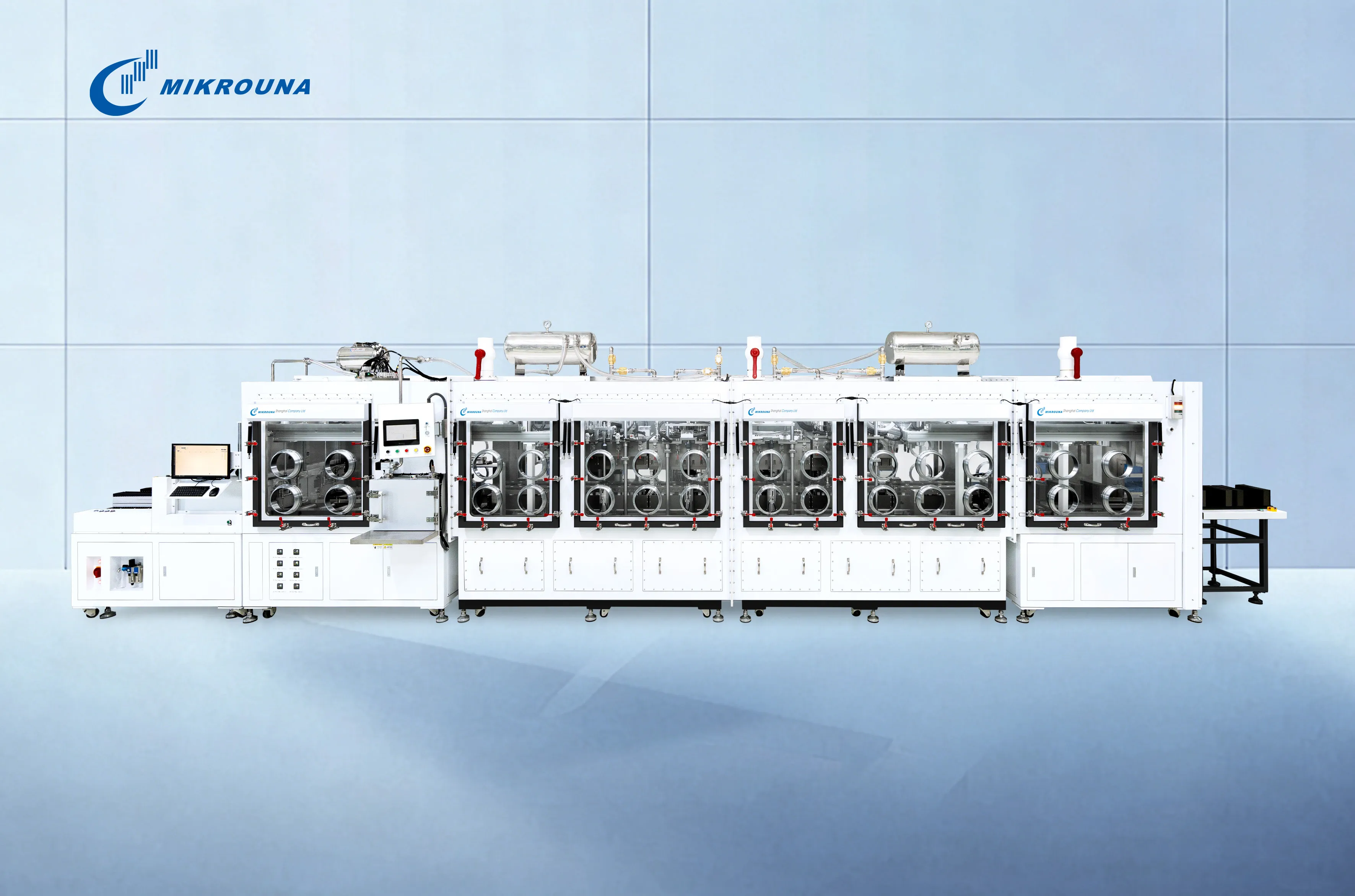
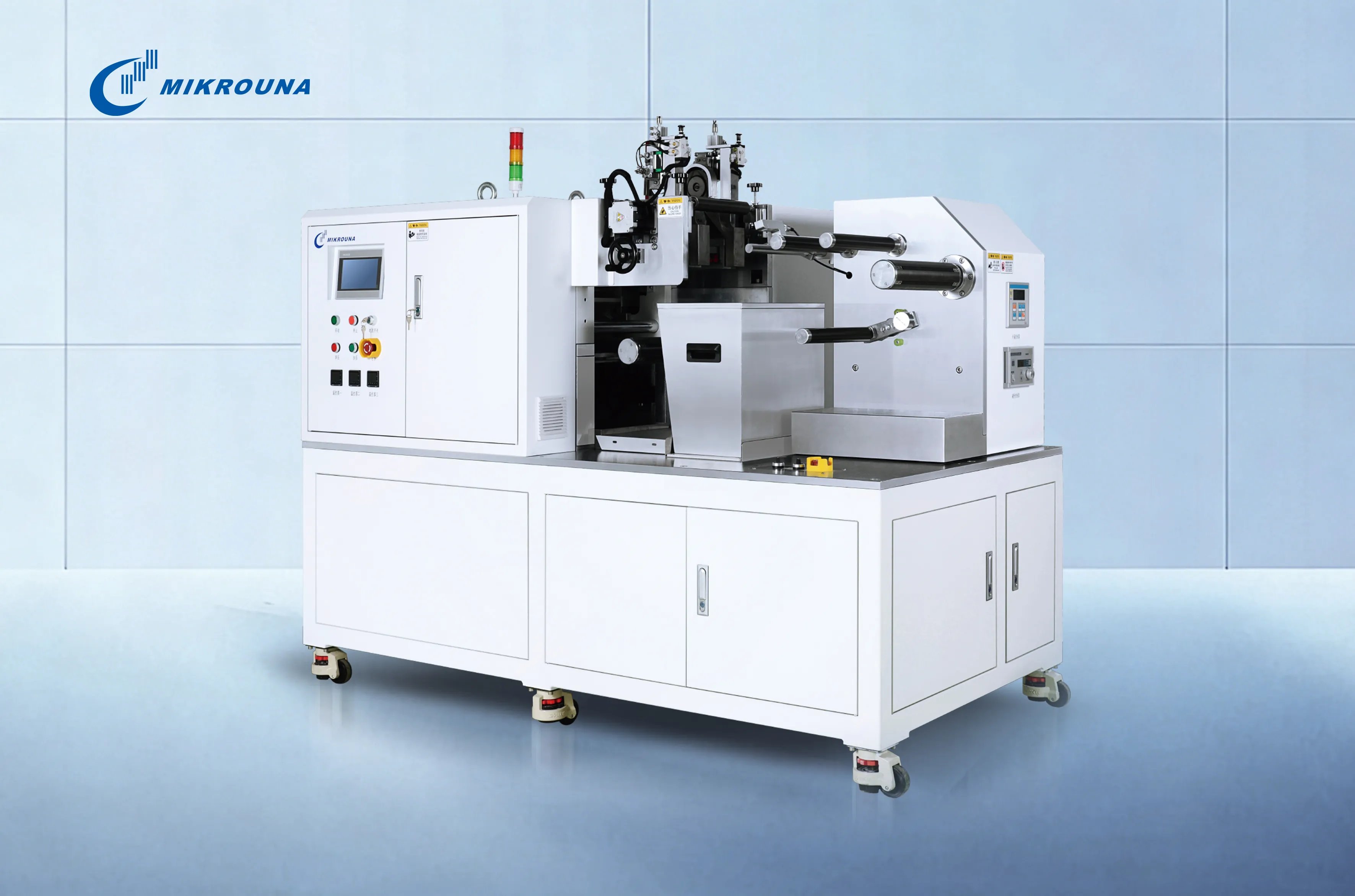
What is Lithium Metal Cutting and Stacking Integrated Machine?
In the industrialization process of solid-state batteries and lithium metal batteries, the processing precision and yield of lithium metal anodes have always been a core pain point. Lithium metal is soft and highly ductile, and traditional cutting and stacking equipment is prone to "sticking" when cutting lithium foil—lithium shavings adhere to the cutting tool, which not only causes burrs on the cut edges, but may also cause short circuits in the electrode or puncture the separator, seriously affecting the safety and consistency of the cell.
The industrialization of sulfide solid-state batteries also relies heavily on lithium metal anodes as the "core" material. Among various solid-state electrolyte technologies, sulfides have attracted significant industry attention due to their ionic conductivity being closest to that of liquid electrolytes. However, lithium metal is extremely soft and has very high surface activity, making it prone to burrs, adhesion, and indentations during cutting and stacking due to blade sticking in the cutting and stacking machine.
Even more problematic is that if the tabs and lithium strips are not tightly bonded, poor contact during subsequent battery cycles can easily lead to localized overheating or a surge in interface impedance, directly weakening the stability advantage of sulfide electrolytes. These two issues are not merely manufacturing yield problems, but critical bottlenecks determining whether sulfide solid-state batteries can move from the laboratory to mass production. So how can these two hurdles be overcome simultaneously from the equipment side?
I. The core of non-stick blades lies in the "separation" and "lubrication" strategies.
When conventional cutting and stacking machines cut lithium metal, the contact surface between the blade and the lithium strip becomes sticky due to localized high temperatures and adhesive forces, often resulting in burrs exceeding the 0.03mm process threshold.
However, the new generation of integrated cutting and stacking machines, such as the mikrouna lithium metal integrated cutting and stacking machine, employs a dual solution: 1. The traction and cutting mechanism is equipped with an automatic oiling and wiping device, which provides micro-lubrication to the upper and lower blades after each cut, effectively reducing the adhesion between lithium debris and the blade surface;
2. The gap between the upper and lower blades is precisely adjusted using a ball screw, combined with a closed-loop servo traction system, ensuring crisp and clean cutting movements, with a lithium strip length cutting accuracy of ±0.1mm. Actual verification shows that even after tens of thousands of consecutive cuts, there is still no significant accumulation of lithium debris on the blade surface, and the cut surface is smooth and burr-free.

II. Tab Bonding: A "Biting" Force That Prevents Detachment Even When Teared by the Current Collector
Besides cutting, the reliability of the bonding between the tabs and the lithium strip is another technical challenge. This equipment incorporates two processes in the copper tab fabrication stage: pre-pressing and final pressing. The final pressing mechanism is driven by a servo motor, with adjustable pressure from 0 to 1T. The flatness of the upper and lower templates reaches 10μm, and a release film can be applied to the lower template to prevent sticking. Most notably, its bonding process creates a strong "cold weld" effect between the tabs and the lithium strip—even under extreme conditions where the copper foil current collector is forcefully torn, the bonded area of the tabs remains tightly adhered and will not detach.

III. How Structural Design Ensures "Non-sticking" and "High Precision"
1. Micro-tension control during lithium strip unwinding (adjustable from 0 to 5N, correction accuracy ±0.1mm);
2. CCD pre-positioning (positioning accuracy ±0.1mm) and four sets of pressure knives on the stacking table working in crisscross motion, the entire machine is adapted to the delicate characteristics of lithium metal;
3. The pressure knives are made with SUS440C+ anti-stick coating, ultra-thin machining, and rounded corners. During stacking, the pressure knives slightly lift before retracting from the electrode to prevent adhesion and damage;
4. The vacuum chuck uses a micro-perforated design to prevent lithium strip adhesion. These details collectively ensure an overall alignment accuracy ≤ ±0.5mm, a separator alignment accuracy ≤ ±0.3mm, and a stacking pass rate of up to 99%.
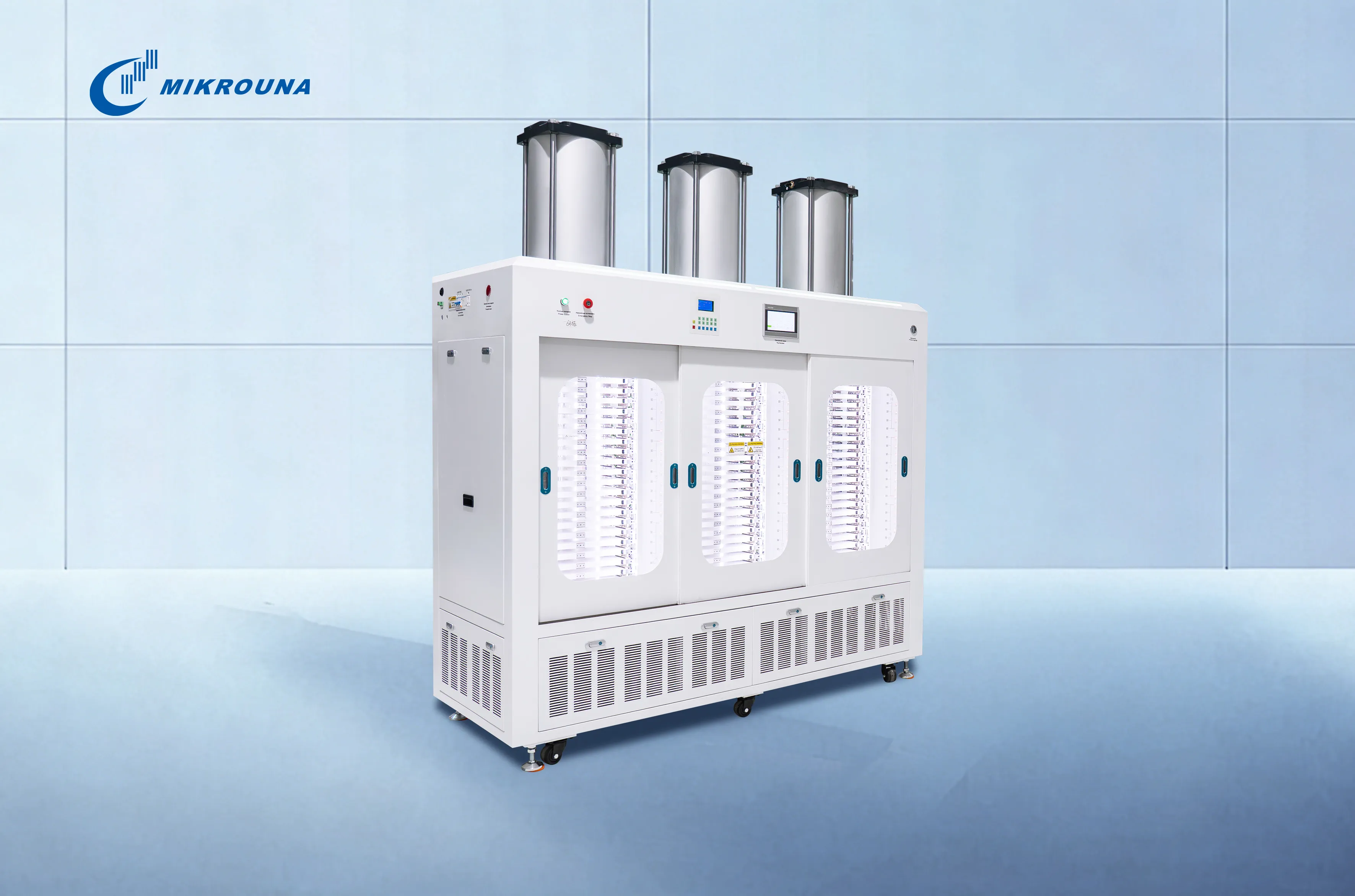
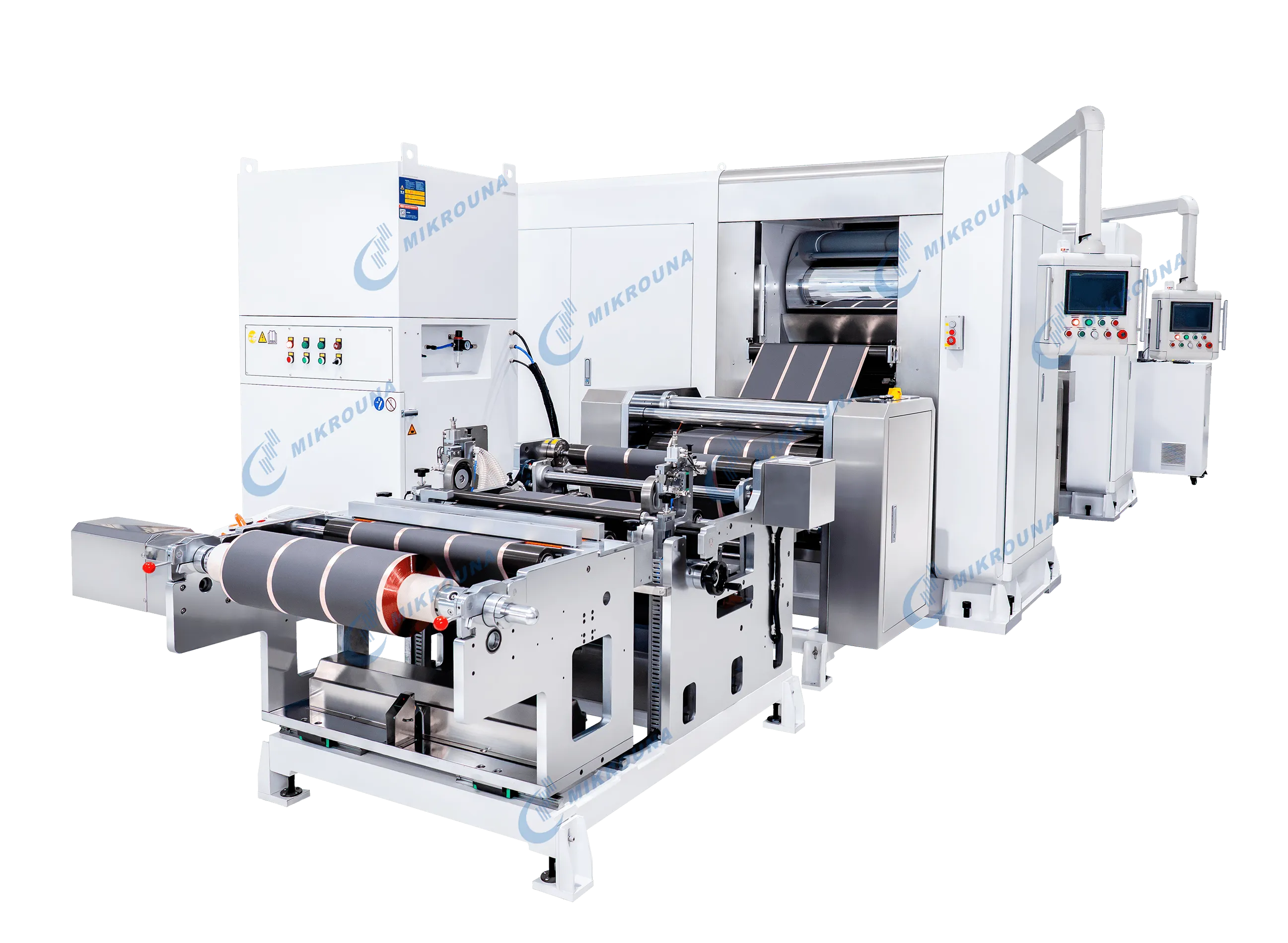
Among domestic equipment manufacturers, Mikrouna's lithium metal cutting and stacking integrated machine has achieved the engineering implementation of the above-mentioned full-process functions. From tooling and fixtures to the control system, it can be flexibly adapted to meet the transition needs from R&D pilot testing to mass production.
IV. Conclusion
The "non-stick blade" technology in lithium metal cutting and stacking is not a single technology, but the result of coordinated optimization of multiple processes, including unwinding, blade wiping and oiling, cutting, and pressing. When cutting burrs are effectively suppressed and the tabs are firmly pressed together, the yield and safety of the battery cell are solidly guaranteed.
-
 2024-06-01
 -
 2026-10-09
 -
 2026-10-12
 -
 2026-10-13
 -



Mikrouna,Far beyond an equipment supplier — your long-term strategic partner for battery technology upgrading!