

What is a lithium battery tab welding and taping machine?
In the manufacturing process of lithium-ion batteries, the tab is a critical component connecting the battery cell's interior to the external circuit. The quality of tab welding directly impacts the cell's internal resistance, heat generation, safety, and consistency; furthermore, insulating protective tape is typically applied to the welded area to mitigate the risk of short circuits and damage. The lithium-ion battery tab welding and taping machine is an automated system designed to perform these two key operations.
I.What is a lithium battery tab welding and taping machine?
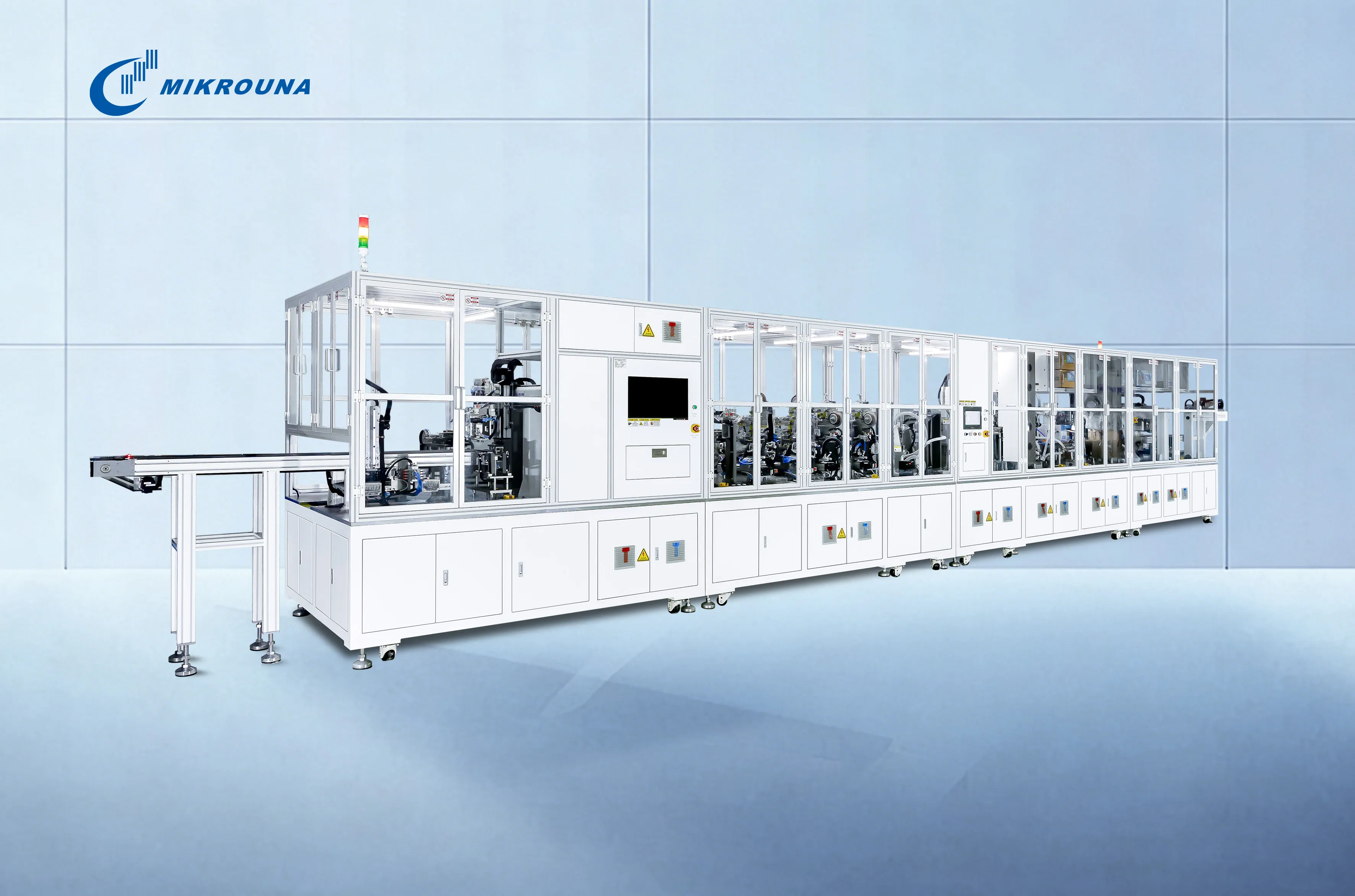
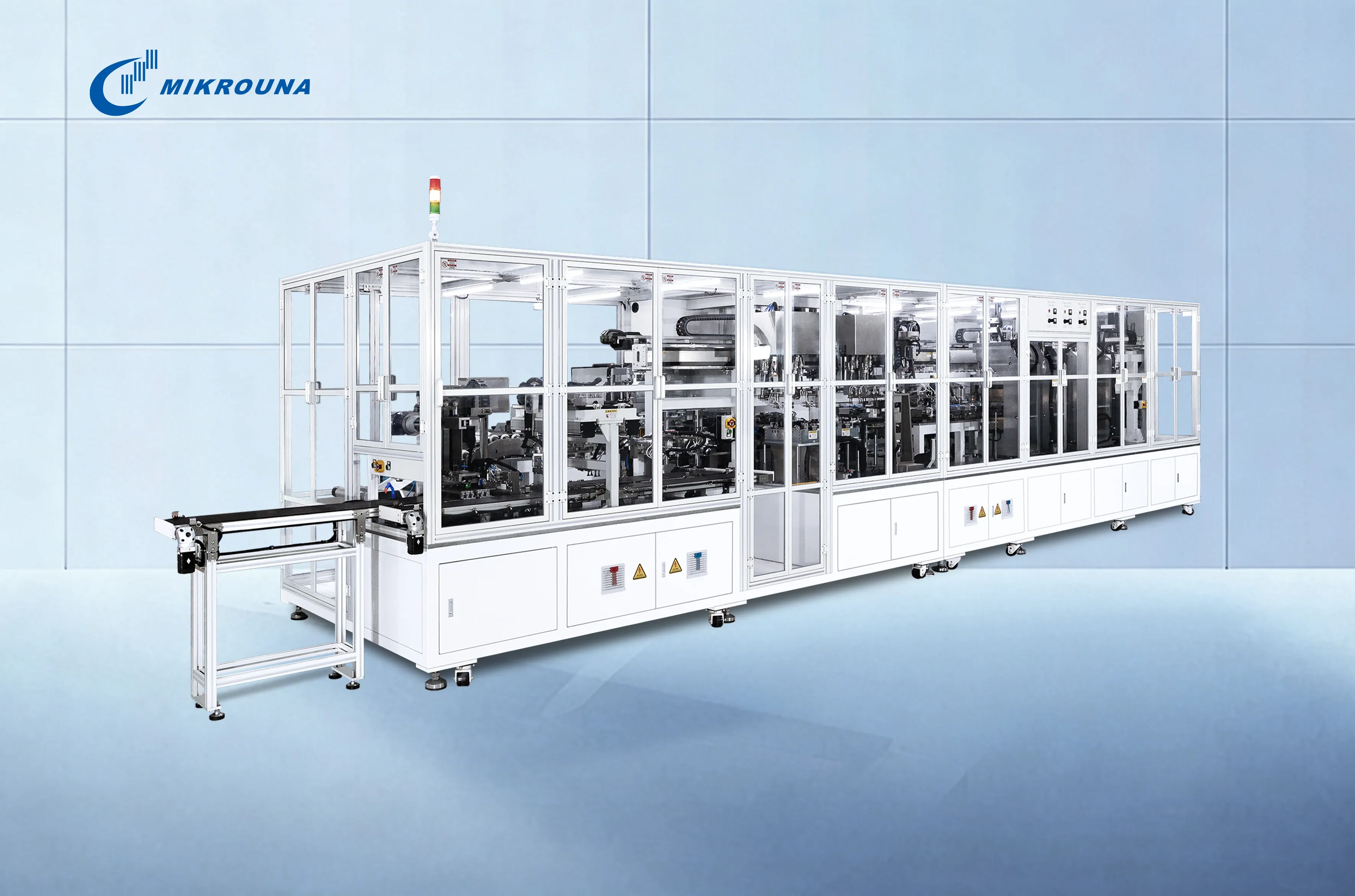
Simply put, a lithium battery tab welding and taping machine is a piece of equipment used during battery production to weld tabs and automatically apply insulating protective tape over the welded area. Beyond welding and taping, these machines often integrate processes such as CCD visual inspection and tab shaping and cutting, making them suitable for battery R&D and manufacturing environments that demand high precision and cleanliness.
From a process perspective, the goal of this equipment is not merely to replace manual labor; rather, it aims to link stages—such as loading, welding, taping, and unloading—into a continuous workflow. This reduces intermediate handling and human intervention, thereby enhancing welding consistency and taping precision.
II. What are the core process steps?
A typical tab welding and taping system generally involves the following steps:
1. Feeding: Battery cells or tab assemblies are fed into the equipment.
2. Welding: Ultrasonic or laser welding is used to join the tab to components such as the connecting strip.
3. Inspection: Methods such as CCD visual inspection and coaxial monitoring are used to check weld consistency and detect defects like cold welds or missed welds in real-time.
4. Taping: Insulating protective tape is automatically applied to the welded area.
5. Unloading:After taping and inspection are complete, the assembly moves to the next process step.

III. How to evaluate key parameters and capabilities?
Taking the mikrouna integrated tab welding and taping machine as an example, the following parameters are typically prioritized during equipment selection:
●Positioning accuracy: Mechanical precision positioning reaches ±0.5 mm;
●Inspection capabilities: CCD visual inspection, coaxial monitoring of weld consistency, real-time detection of cold welds or missed welds, and real-time in-line inspection of appearance and performance;
●Compatibility: Accommodates cell widths of 40–80 mm, lengths of 100–180 mm, and thicknesses of 5–10 mm, while supporting rapid model changeovers and various lithium battery material systems;
●Welding heat impact: Low-temperature welding technology limits the heat-affected zone to <0.3 mm, minimizing thermal damage to surrounding materials;
●Production capacity and stability: Production capacity reaches ≥9 ppm, and key components offer long service lives, helping to reduce operation and maintenance costs.
Mikrouna’s integrated tab welding and taping machine exemplifies this design philosophy of integration and high precision in meeting such rigorous industry standards. The equipment combines multiple processes—including CCD visual inspection and tab shaping and cutting—to provide a stable, reliable solution for the R&D and production of liquid lithium-metal batteries. For enterprises with specific process requirements, Mikrouna can also provide customized tab welding and taping solutions tailored to their specific needs.
IV. Why the trend towards integration?
The value of integrated equipment lies primarily in several areas: reducing the handling of battery cells between process steps, thereby lowering the risk of contamination and damage; enhancing the traceability of welding quality through visual inspection and real-time monitoring; accommodating the production of cells with diverse specifications via rapid changeover capabilities; and simultaneously saving production line space while facilitating automated management.
V. Conclusion
The lithium battery tab welding and taping machine is a key piece of equipment for enhancing automation in battery manufacturing and ensuring product consistency and safety. By integrating multiple processes—such as welding, taping, inspection, and shaping—into a single system, it overcomes the efficiency and quality bottlenecks associated with multi-step operations. As battery technology evolves toward higher energy densities and stricter safety standards, such highly integrated, intelligent, and flexible automated equipment will play an increasingly vital role in future battery production.
-
-
-
 2026-08-21
 -
 2026-04-27
 -
 2024-06-01



Mikrouna,Far beyond an equipment supplier — your long-term strategic partner for battery technology upgrading!