

What is a 3-roll dry film forming machine?
In the research and development and manufacturing of new energy, especially solid-state batteries and high-energy-density batteries, "dry electrode" technology is gradually becoming a key research direction for the industry because it does not require solvents, has lower manufacturing costs, and has higher energy density potential. In this process, the precision and stability of the film-forming equipment directly determine the performance of the final material.
I. What is a three-roll dry film forming machine?
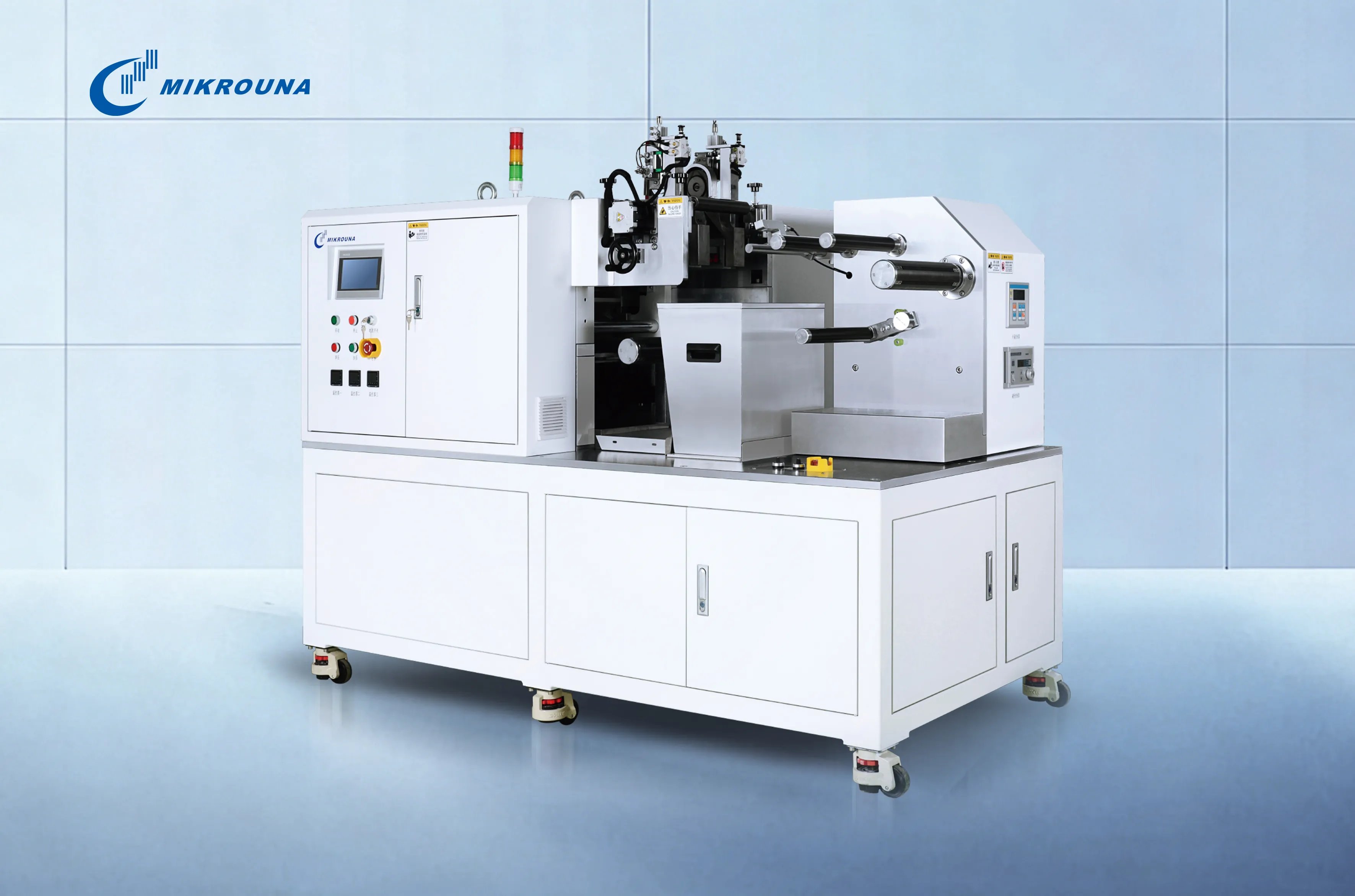
In simple terms, a three-roll dry film forming machine is a high-end film manufacturing equipment designed specifically for high-precision, solvent-free dry processes. It uses three independently temperature-controlled precision rollers to directly press dry powders such as solid electrolytes and electrode materials into uniform, micron-sized ultrathin films, which are then used in the preparation of dry electrodes for all-solid-state batteries and lithium batteries.
II. Why should we focus on the "micron-level" precision of film fabrication?
In the preparation of solid electrolyte membranes or dry electrode materials, the uniformity of thickness has a decisive influence on the internal resistance and cycle life of the battery.
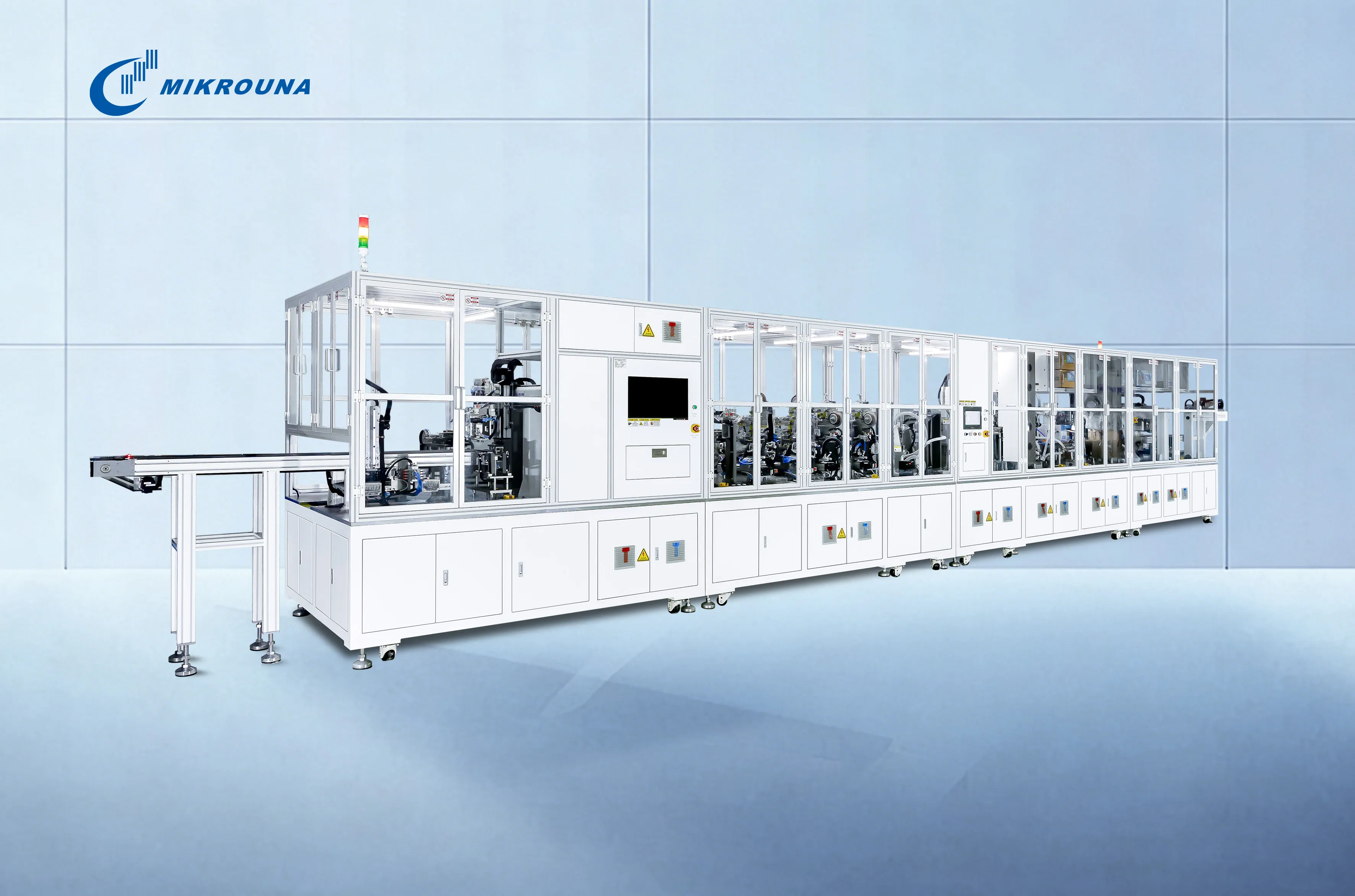
Taking Mikrouna's three-roll dry film-making equipment as an example, the radial runout of its rollers usually needs to be controlled to an extremely high standard of <1.5μm, so as to ensure that the final film thickness accuracy reaches ±2μm. Meanwhile, the stringent requirements for roller surface roughness (Ra≤0.02) ensure an extremely smooth membrane surface. This micron-level physical control is the foundation for achieving ultrathin and uniform film formation.
III. Core Driving Force: Synergy of Pressure, Gap, and Temperature
Dry film formation is essentially a physical compaction and extension process of powder under strong and uniform mechanical force. To achieve this, precise control of three key parameters is essential:
Precise pressure and gap adjustment: High-end equipment is typically equipped with a servo-controlled wedge fine-tuning system, allowing for roll gap adjustment accuracy up to 1μm. The hydraulic system can provide a roller line pressure of 0.02~1.2t/cm (the maximum roller pressure can even reach 30 tons), and the pressure control accuracy is ≤±0.1MPa. This enables the equipment to handle materials with varying hardness, ranging from soft polymers to hard inorganic powders.
Independent temperature control system: During the calendering process, appropriate temperature helps the polymer binder soften and form a film. The three-roller independent heating control system (supporting room temperature to 150°C with accuracy control within ±2°C) can provide the most suitable temperature field environment for different material formulations.
Dynamic tension control: Combined with a dynamic correction system of ±0.5mm and a tension control system of ±2N, it can effectively prevent the membrane material from breaking or wrinkling during the forming and winding process.
IV. Summary
The three-roll dry film forming machine is not a simple physical calendering machine, but a composite intelligent equipment integrating precision machining, high-precision servo control, intelligent hydraulic and temperature control systems. As dry process technology continues to be applied in the fields of new energy and specialty chemicals, this type of high-precision, highly environmentally adaptable film-forming equipment will inevitably become the core infrastructure for promoting the implementation of next-generation battery technology.
-
-
 2024-06-01
 -
 2026-04-27
 -
-




Mikrouna,Far beyond an equipment supplier — your long-term strategic partner for battery technology upgrading!