

What is a lithium battery calendering machine?
In the sophisticated industrial chain of lithium battery manufacturing, there is an often overlooked yet crucial behind-the-scenes player—the rolling mill. It's not simply about flattening coated electrode sheets; it's an art of precise control over thickness, density, and consistency. If the active material is the "flesh and blood" of the battery, then the rolling process is the key step in shaping the perfect "skeleton" of the electrode sheets, determining the consistency of battery performance and safety.
The core mission of a roller press: More than just "pressing"
The essence of a roller press is to apply immense linear pressure to sheet or roll materials using one or more pairs of rotating rollers, causing plastic deformation and thus altering the material's thickness, density, and surface properties. In lithium-ion battery manufacturing, this process is particularly crucial: it compresses coated electrode sheets to the target density, ensuring close contact between the active material and the current collector, directly impacting the battery's energy density, internal resistance, and cycle life. In short, the quality of the roller pressing determines the "starting line" for battery performance.
Modern high-end roller presses have developed into complex systems integrating mechanical, electrical, hydraulic, and automated measurement and control. The technical challenge is to simultaneously achieve micron-level thickness tolerances and extremely high surface quality in high-speed continuous production. For example, the industry's requirements for advanced equipment have moved towards: roll gap control accuracy of ±1~2μm, transverse thickness consistency ≤±1.5%, longitudinal consistency ≤±1.0%, and roll parallelism even controlled within 1μm/full width. Behind these numbers are system-level engineering of equipment rigidity, thermal management, tension and speed servo control.

Intelligent Closed-Loop: A Leap from "Manufacturing" to "Intelligent Manufacturing"
Traditional roller presses rely on manual experience for adjustments, while the core competitiveness of modern roller presses lies in their closed-loop control system. By integrating online thickness detection, tension sensors, and fully automatic hydraulic adjustment, the system can compare target values with actual values in real time and dynamically compensate for roll gaps or linear speeds in milliseconds.
Taking a typical roll-to-roll continuous process as an example, the equipment needs to solve several control problems simultaneously: How will the unwinding tension fluctuation affect the electrode stretching? How can the roller speed change be synchronized with the drying oven section? How can the edge burr be precisely controlled? A first-class roller press ensures consistent quality from the first meter to several thousand meters of finished products by achieving hard indicators such as tension control accuracy ≤ ±1~2%FS, linear speed control accuracy ≤ ±0.1%FS, and edge width accuracy ≤ ±0.05mm.
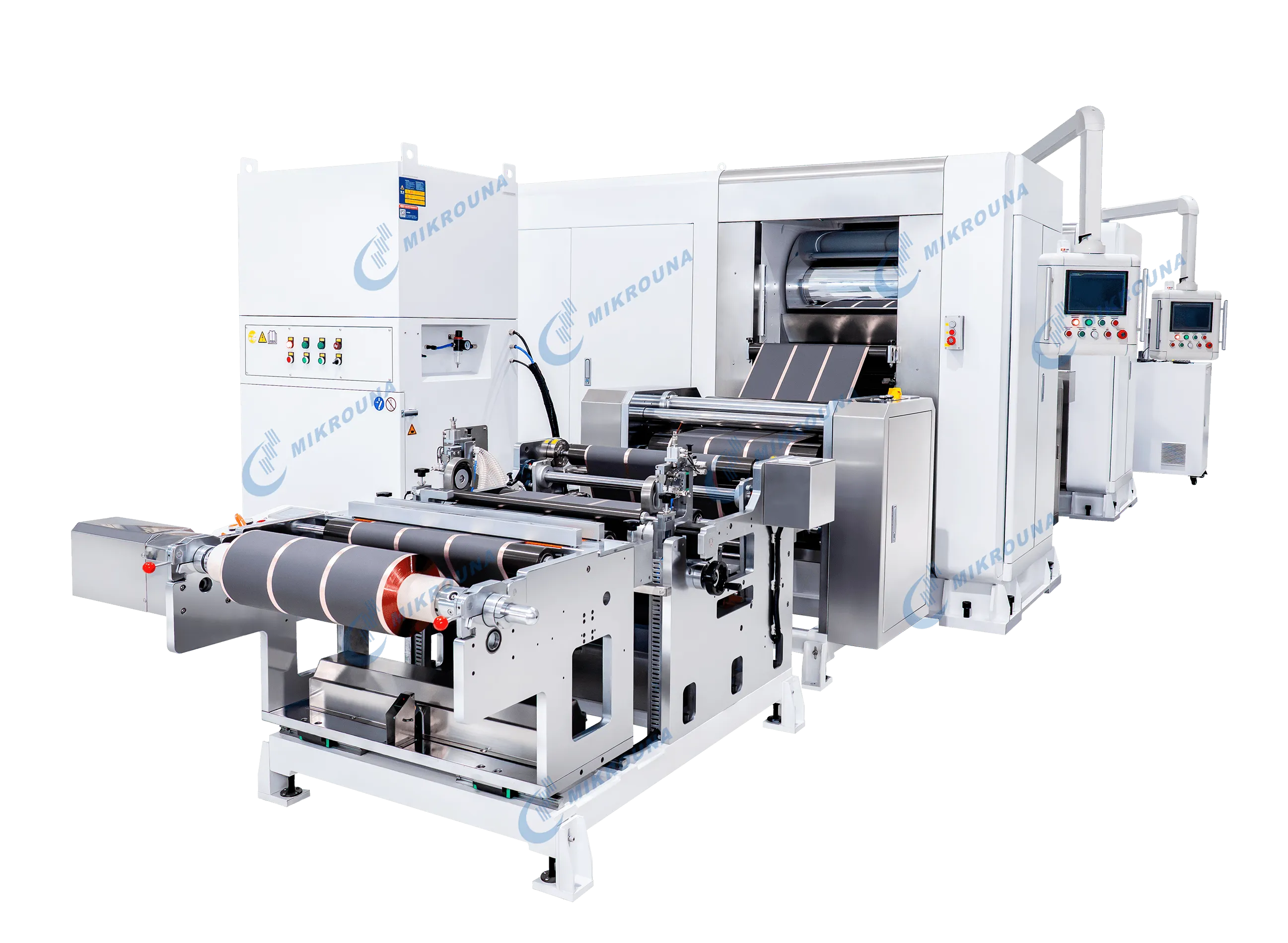
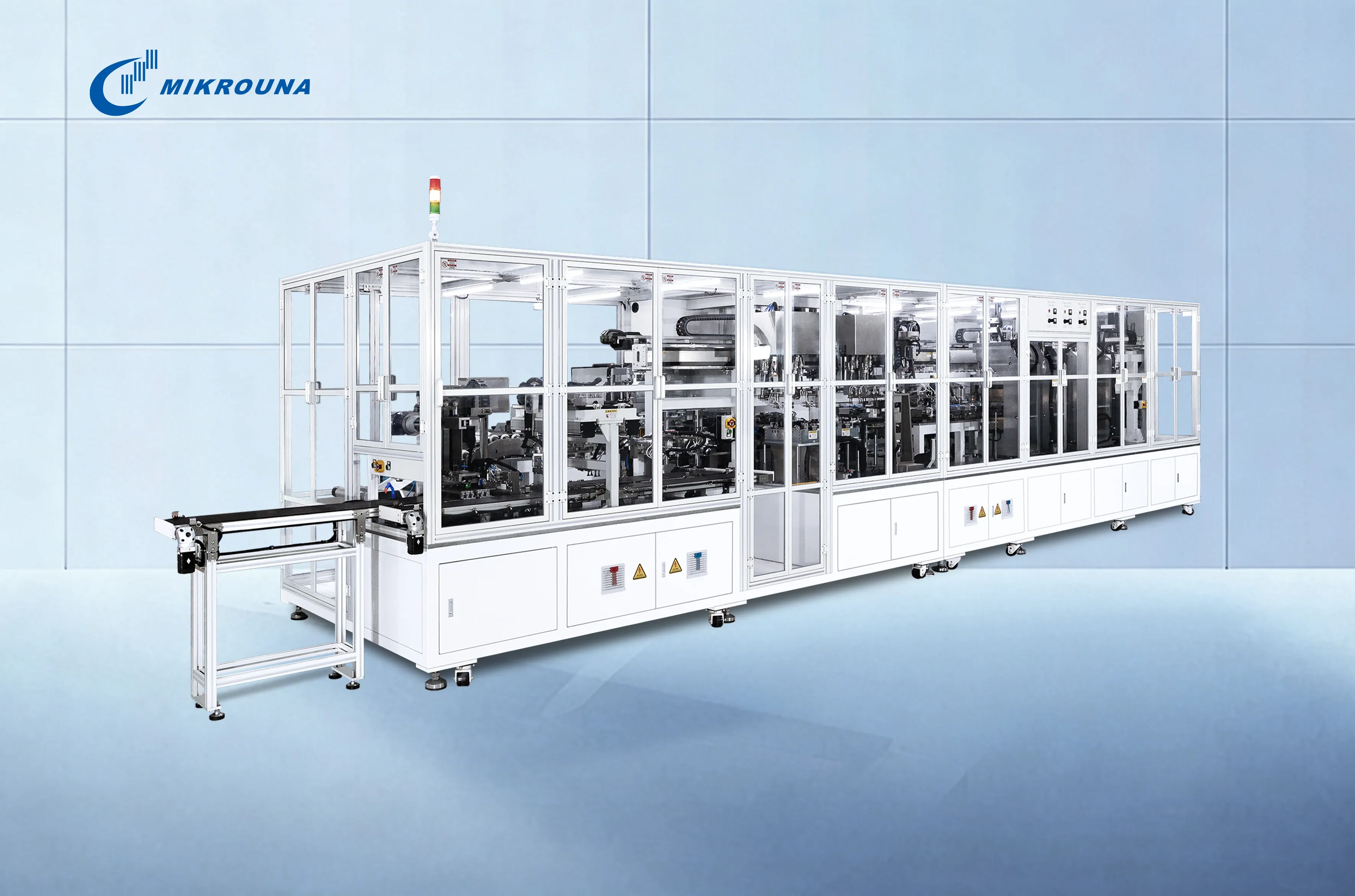
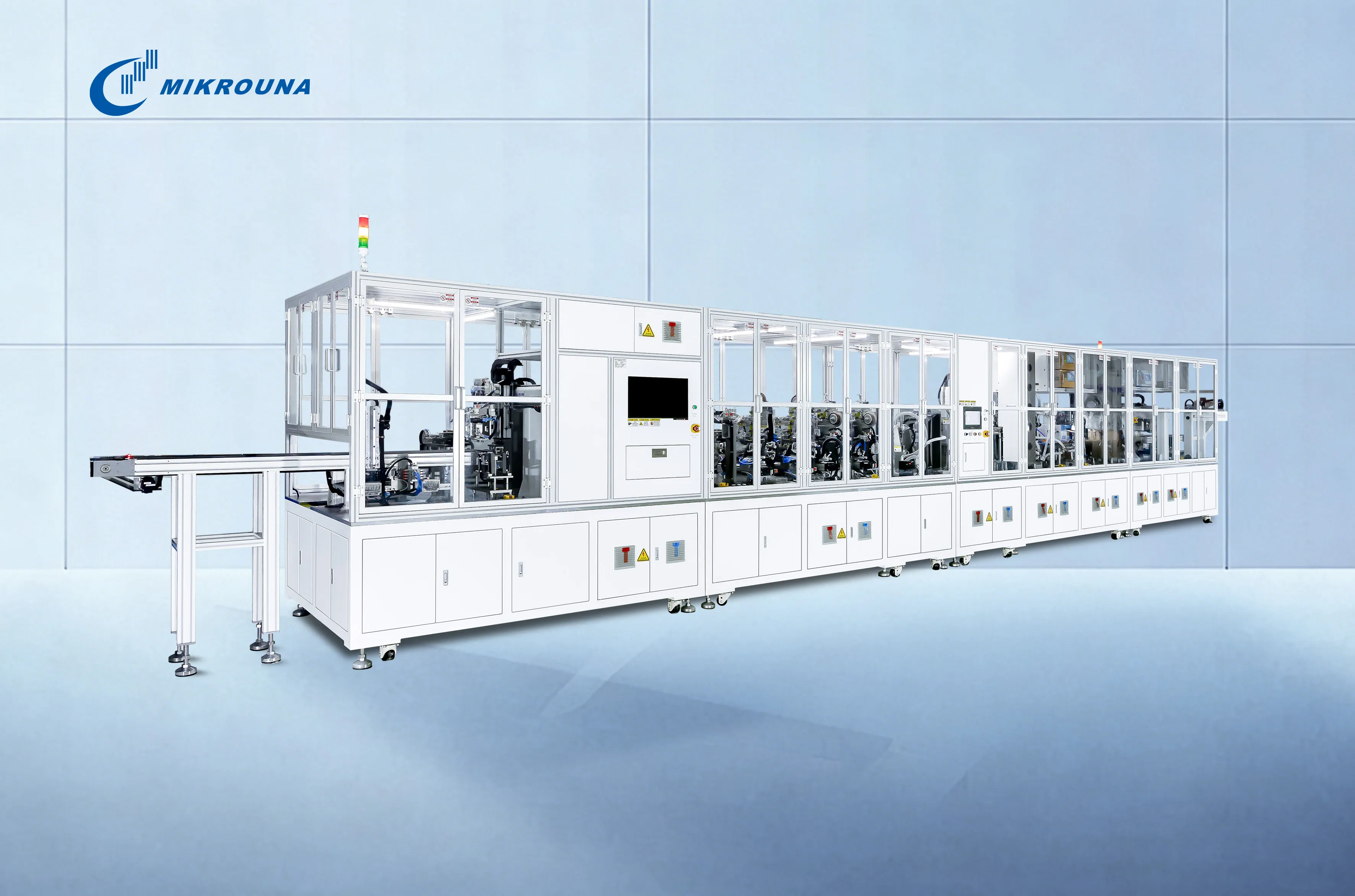
As roller presses evolve towards intelligence and flexibility, the scalability and customization capabilities of the equipment become increasingly important. For example, the Microna roller press embodies this trend. It is not merely a roller press, but a customizable process platform that adapts to the electrode rolling needs of different systems and process routes through modular combinations.
A Revolution of "Flatness" in the Microscopic World
The ultimate goal of roll forming is the high uniformity of the material's microstructure. The neatness of the rolled-up end face can be controlled within ≤±0.1mm. This not only affects the appearance but also ensures the stability of subsequent slitting and winding processes, avoiding the risk of internal short circuits caused by uneven edges.
In summary, roll forming technology is evolving from a simple "pressure device" into a master of controlling the microstructure of materials. It measures the depth of industrial manufacturing with micron-level precision and supports the efficiency of large-scale production with continuous and stable operation. In the pursuit of energy density and safety, every micron-level advancement in roll forming technology has the potential to trigger a qualitative leap in battery performance. In the future, with the rise of new processes such as dry electrodes and solid-state electrolyte membranes, roll forming technology will face even more challenges, and the scope of its precision control will become even richer.
-
-
-
-
 2024-06-01
 -



Mikrouna,Far beyond an equipment supplier — your long-term strategic partner for battery technology upgrading!