

What is a lithium battery formation cabinet?
In the lithium battery production process, "formation" is an indispensable step. Simply put, formation is the process of a battery undergoing its first charge and discharge after being filled with electrolyte and sealed. During this process, a solid electrolyte interface film, commonly known as the SEI film, is formed inside the battery. The quality of the SEI film directly affects the battery's cycle life, coulombic efficiency, rate performance, and safety.
I. What is a lithium battery formation cabinet?
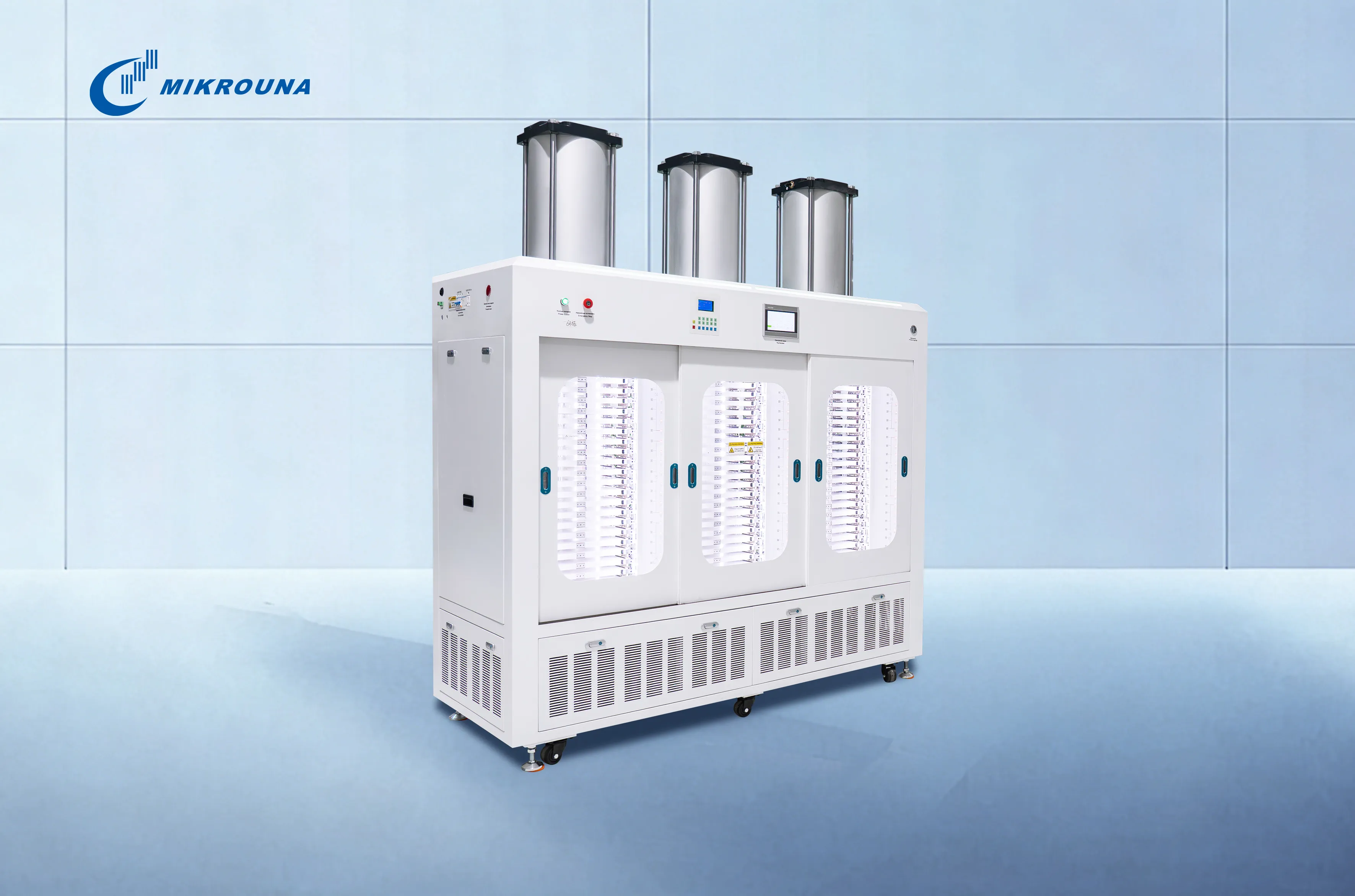
Lithium battery formation cabinets are mainly used for battery formation, capacity testing, and performance testing. It uses programmable charge and discharge cycle control to allow the battery cell to form a relatively stable SEI film during the first charge, while simultaneously completing capacity sorting and performance testing. For systems such as liquid lithium metal batteries, the formation process also needs to suppress lithium dendrite growth to reduce safety risks during subsequent use.
In terms of equipment composition, a formation cabinet typically includes a charging and discharging power supply, a temperature control system, a pressure fixture, a safety monitoring system, and host computer control software. It must ensure the accuracy of voltage and current control for each channel, and also allow the battery cell to complete the reaction under suitable temperature and pressure conditions.
II. How to interpret the key indicators of a chemical formation cabinet?
When evaluating a chemical formation cabinet, one should not only consider whether it can charge and discharge, but also its control precision, consistency, and energy efficiency. For example, temperature control range, pressure output range, voltage and current accuracy, and power conversion efficiency will all affect the formation result. High-end chemical formation cabinets often require a comprehensive balance between temperature, pressure, and electrical precision to better meet the customized needs of customers.
In the equipment solution, mikrouna's lithium battery formation cabinet can be customized for different cell specifications, production line cycle time and process requirements to better meet specific formation needs.
III. Safety and energy efficiency design are equally important
The formation cabinet generates heat during charging and discharging, and there is also a risk of battery malfunction. Therefore, safety design cannot be ignored. Common safety features include smoke detection sensors, fire alarm systems, tri-color warning lights, and safety light curtains. Some equipment will also use highly flexible flame-retardant wiring to reduce potential hazards caused by wiring problems.
In terms of energy efficiency, bidirectional inverter power supplies are a promising area of research. It can automatically feed the discharged electricity back to the grid, reducing equipment power consumption and workshop heat. Meanwhile, single-channel independent step switching helps avoid instantaneous power fluctuations in the power grid.
The tab contacts are made of superconducting copper plated with 24K gold, which can reduce contact resistance and temperature rise, and improve contact reliability. The heating wires are evenly distributed in a mesh pattern, which also helps to make the temperature of the entire heating plate more uniform and reduce temperature differences.
IV. Conclusion
In summary, the lithium battery formation cabinet is a crucial piece of equipment connecting cell manufacturing with subsequent use. It helps batteries form a more stable interface through precise charge and discharge control, temperature and pressure management, and safety monitoring, thereby improving cycle life and safety.
-
 2026-10-12
 -

-
-
-
 2026-08-21



Mikrouna,Far beyond an equipment supplier — your long-term strategic partner for battery technology upgrading!