

What is a three-roll dry-process film-forming machine?
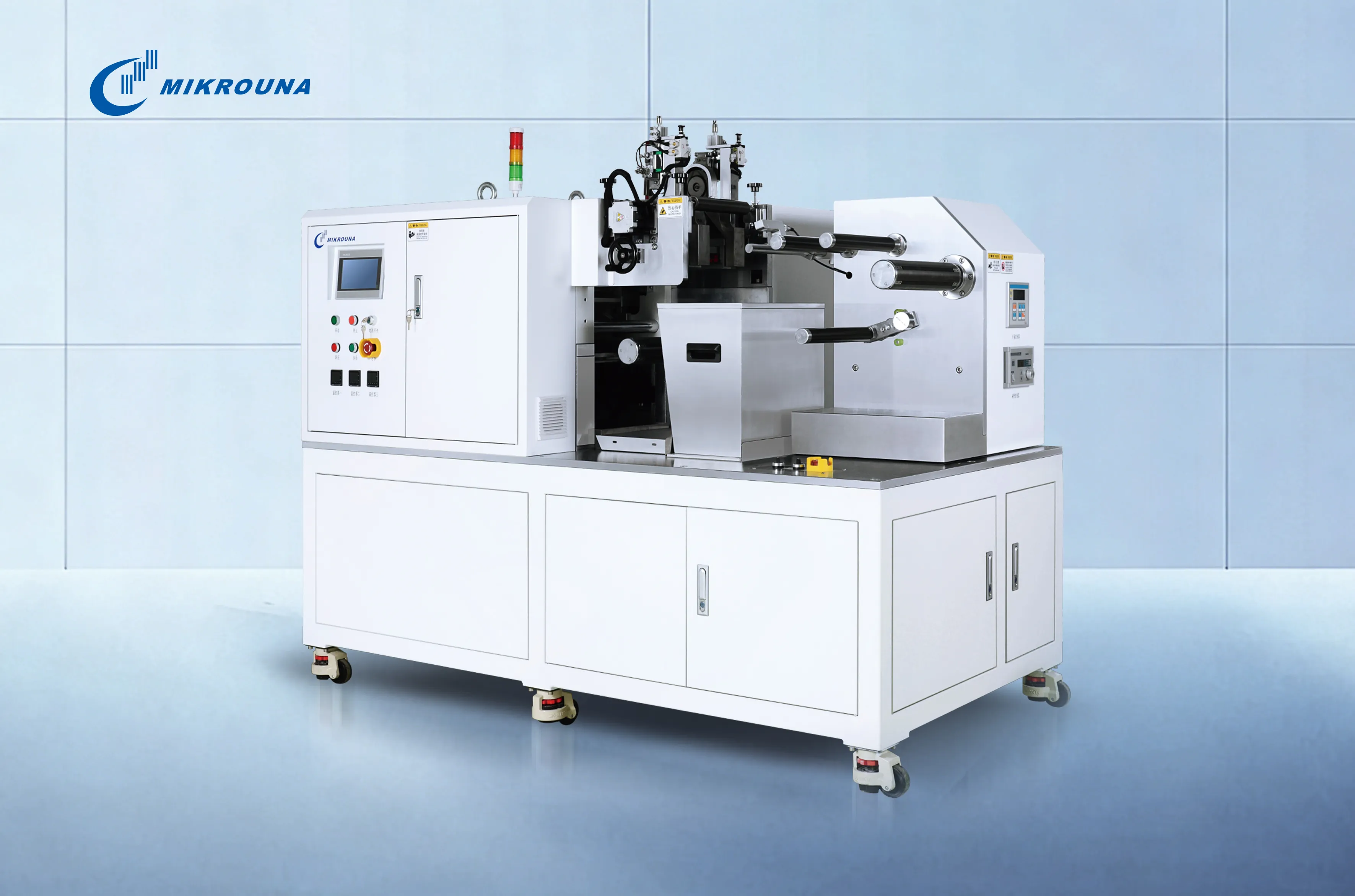
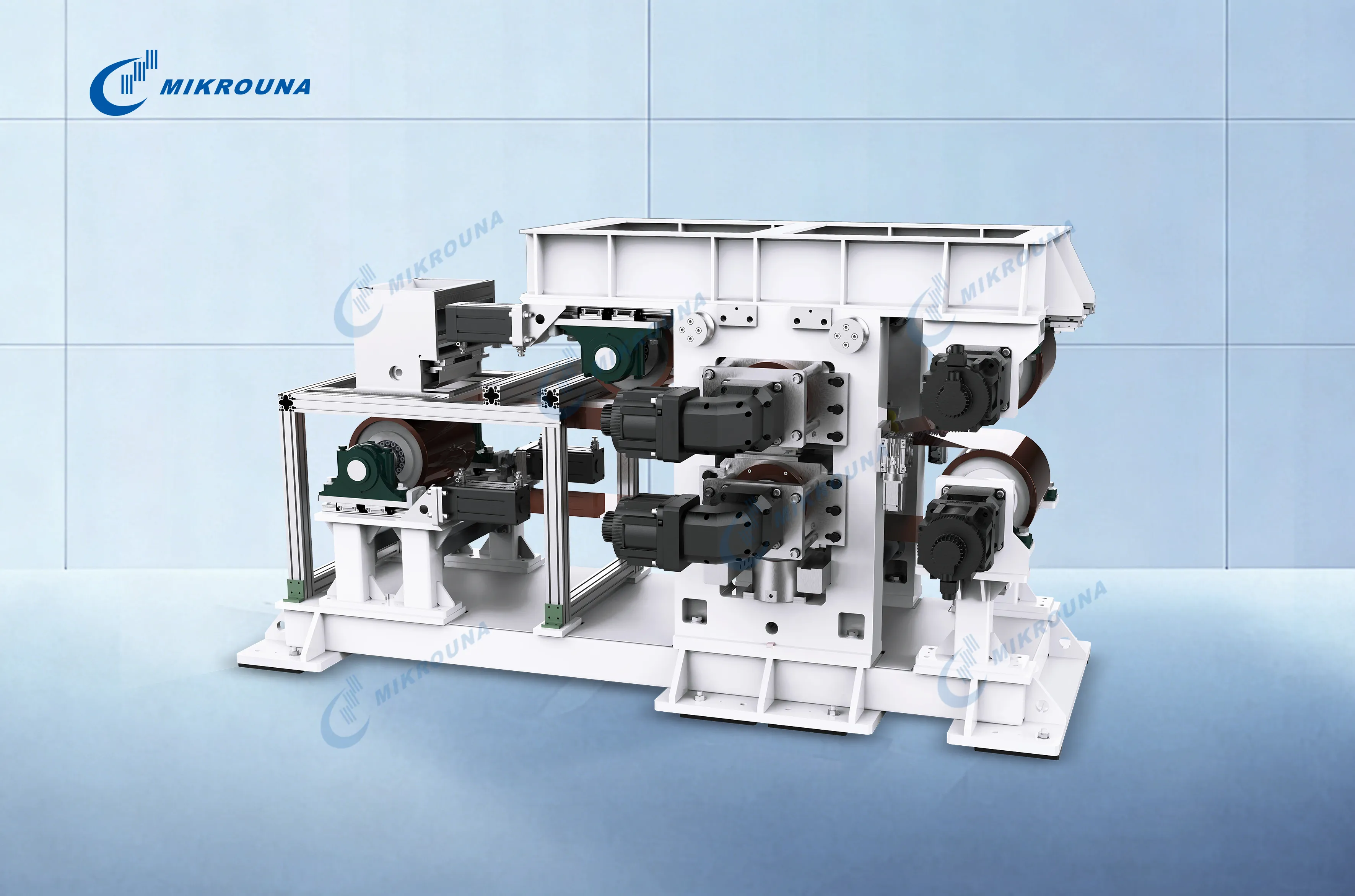
As solid-state battery research gradually moves from material formulation to engineering preparation, how to achieve stable and uniform film formation of dry electrodes and solid electrolyte membranes has become a noteworthy issue in the process. Solid-state battery three-roll dry film forming machine generally refers to equipment that uses a three-roller pressing structure to prepare thin films using a dry process.
By controlling parameters such as roller gap, roller pressure, roller surface temperature and tension, it enables dry powder materials or dry film materials to continuously form film strips with relatively uniform thickness. It is often used in the fields of solid electrolyte membranes and dry electrodes.
I. Why Solid-State Batteries Need to Focus on Dry Film Forming
Traditional wet coating requires solvents and subsequent drying and recycling; dry processes, on the other hand, emphasize powder mixing, fiberization, roll forming, and thickness consistency. For solid-state batteries, the solid electrolyte membrane and dry electrode are more sensitive to membrane thickness uniformity, surface flatness, tension stability and environmental humidity.
Excessive film thickness fluctuations may affect ion transport and interfacial contact; surface roughness, roller surface condition, and correction capability can also affect the continuity and consistency of film formation.
II. Basic Working Logic of Three-Roll Dry Film Forming Machine
The three-roll structure typically uses multiple rolls to form a continuous rolling pressure zone, allowing the material to be gradually thinned and compacted under controlled roll gap and line pressure. Compared to single-roller or simple tablet pressing, the three-roller structure places greater emphasis on progressive forming and tension matching.
The equipment needs to have several capabilities: first, the roll gap can be finely adjusted; second, the inter-roll pressure can be set stably; third, the roll temperature and surface condition can be controlled; and fourth, the film belt can be corrected and tension controlled during operation.
For solid-state battery experimental lines, the equipment can also be integrated with enclosed environments such as glove boxes to reduce the impact of humidity, oxygen, or dust on the materials.
III. What information is worth noting in the parameters of a three-roll dry film forming machine?
Taking mikrouna's three-roll dry film forming machine as an example, the technical parameters of this type of equipment can be understood from several dimensions:
●Film thickness and roll forming accuracy: The page indicates that the roll forming accuracy is ±2μm film thickness, and the radial runout of the rolls is <1.5μm. The smaller the radial runout, the less interference it usually causes to the uniformity of film thickness during roller operation.
●Pressure and roll gap: The linear pressure between rolls is 0.02~1.2t/cm, and the maximum pressure between rolls is 30T; the pressure is set via a touch screen to control the hydraulic output, with a control accuracy of ≤±0.1MPa; the roll gap is finely adjusted by a servo-controlled wedge block, with an adjustment accuracy of 1μm.
●Temperature control system: Three-roller independent heating control, room temperature ~150°C, accuracy ±2°C, the page mentions that the temperature difference of the three-roller independent temperature control system is ±2°C. Independent temperature control of multiple rollers helps reduce the impact of temperature differences between rollers on material flow and film formation.
●Operation and compatibility: Production efficiency 3m/min, machine speed 6m/min; membrane width ≤280mm; supports manual/automatic dual modes, with ±0.5mm dynamic correction and ±2N tension control.
●Environmental compatibility: It can be integrated into a glove box to control the production environment. The recommended operating temperature and humidity are 25±3℃ and 10%~30%RH. The site should be dry, well-ventilated, free from acid and alkali corrosion, and grounded.
In actual production line planning, the mikrouna three-roll dry film forming machine can be customized as needed, and the film width and other specifications can be discussed in conjunction with process requirements. Meanwhile, mikrouna also offers complete solutions for solid-state battery experimental scenarios that require integration with glove boxes or adjustment of production line interfaces.
IV. Suitable Scenarios
The three-roll dry film forming machine for solid-state batteries is more suitable for scenarios involving process development, pilot testing, or experimental line verification of solid electrolyte membranes and dry electrodes; it is also suitable for high-uniformity film forming requirements such as chemical functional membrane materials.
V. Conclusion
The solid-state battery three-roll dry film forming machine is not a simple "film pressing" device, but a dry film forming platform that combines roller gap, pressure, temperature, tension and environmental control.
-
 2024-06-01
-

-
-
-
 2026-10-31



Mikrouna,Far beyond an equipment supplier — your long-term strategic partner for battery technology upgrading!