

What is a lithium battery vacuum sealing machine?
In the manufacturing of pouch lithium batteries, "second sealing" is a crucial process following formation and degassing. Simply put, a lithium battery vacuum sealing machine is a device that punctures and releases air from a battery gas bag, creates a vacuum, and then heat-seales the edges in a vacuum environment. Its goal is not simply to "seal" the battery, but to reduce the risk of moisture intrusion and improve the airtightness and consistency of the battery packaging by removing harmful gases from the air bag, controlling the sealing precision, and controlling the sealing accuracy.
I. What problems does a battery vacuum sealing machine solve?
During the formation process of pouch cell, gas is generated. The gas pouch needs to be punctured and released, and then the sealing area is heat-pressed for sealing. If operated in a normal environment, external moisture and oxygen may affect the internal state of the battery; if the sealing pressure, temperature or parallelism control is unstable, it will also affect the sealing quality.
The value of a battery vacuum sealing machine lies in completing vacuuming, degassing, and hot-pressing sealing in a controlled environment, and integrating post-sealing processes such as edge trimming, folding, and inspection to reduce fluctuations caused by human intervention.
II. What processes does the equipment typically include?
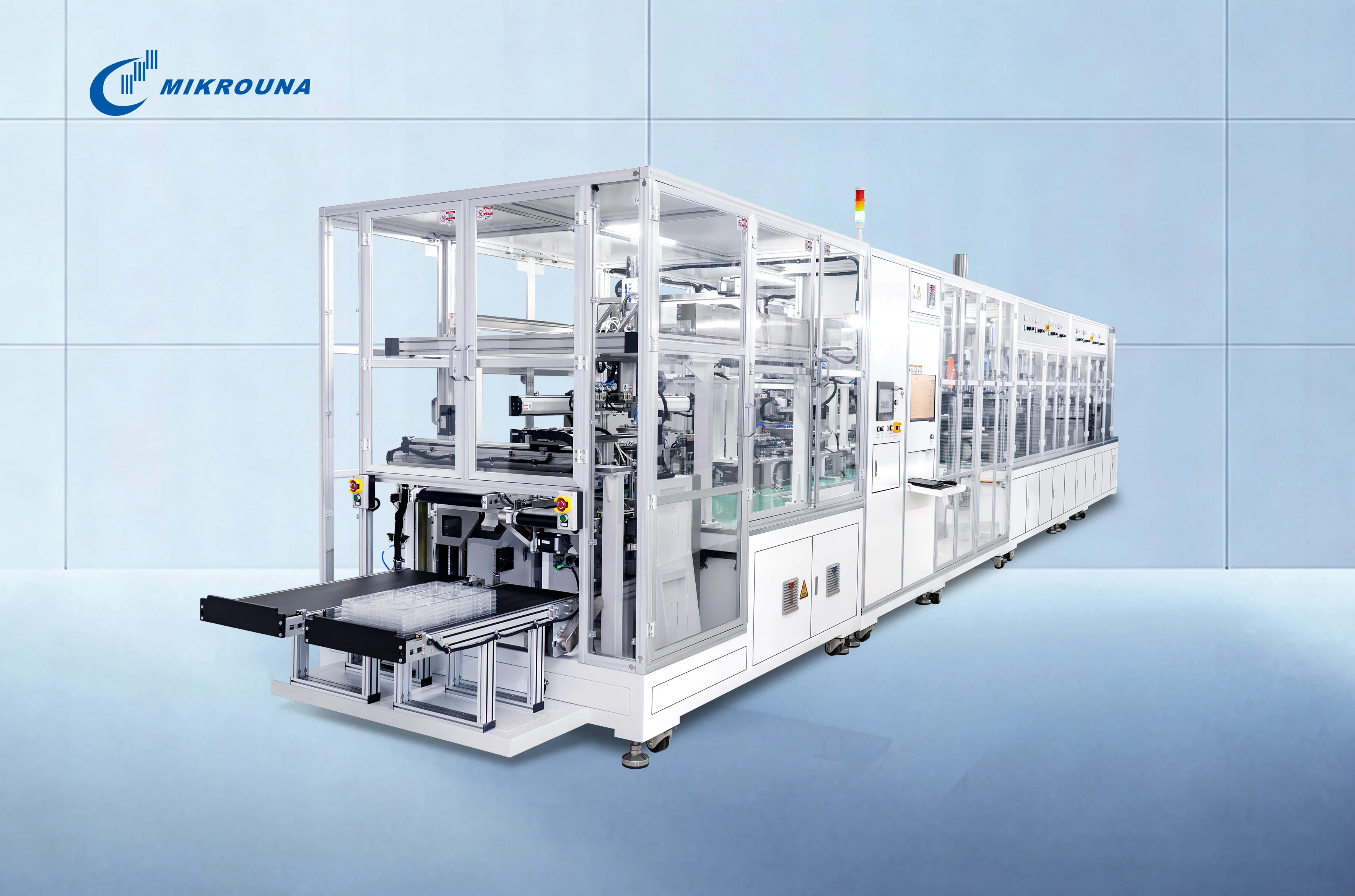
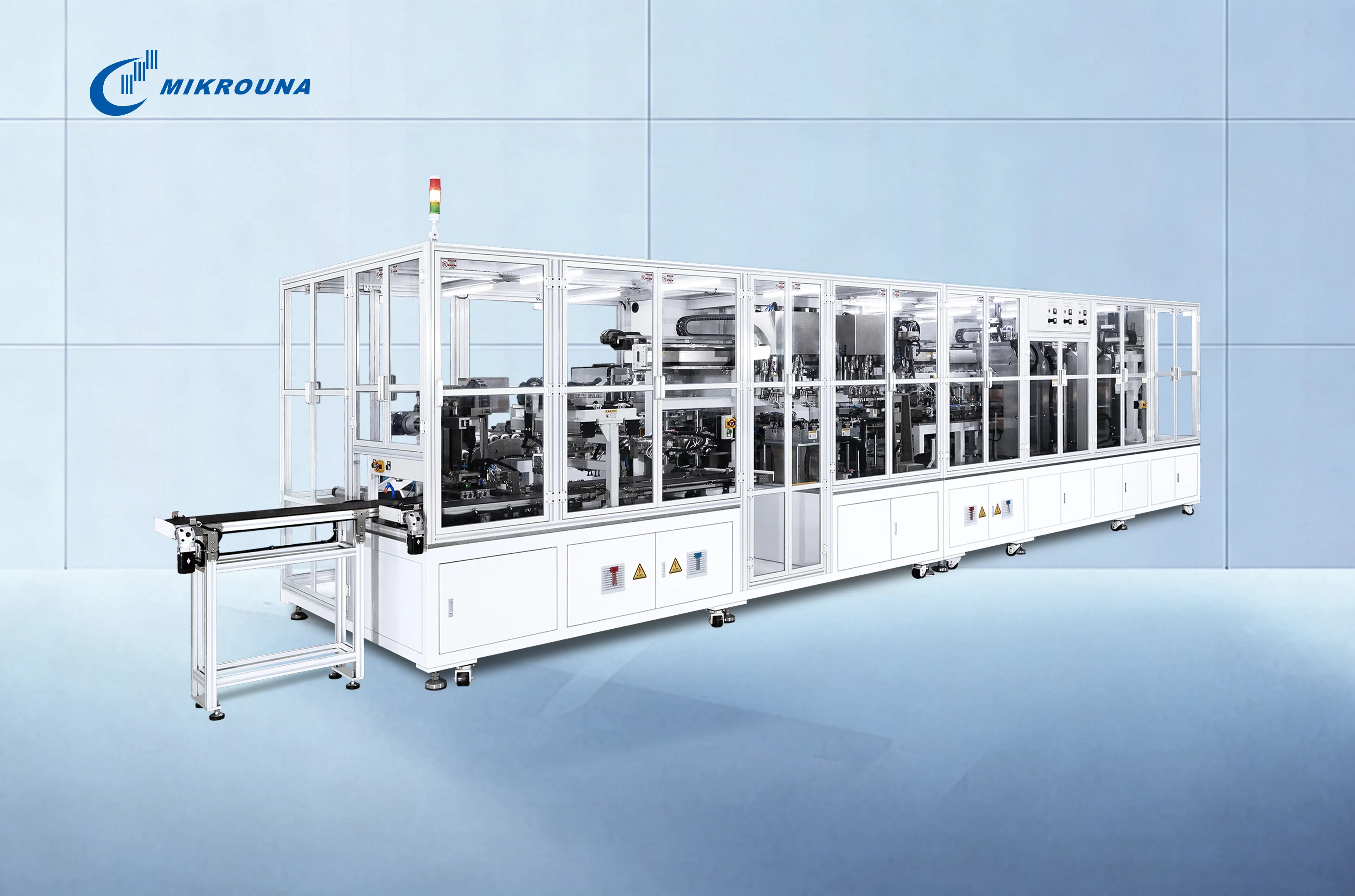
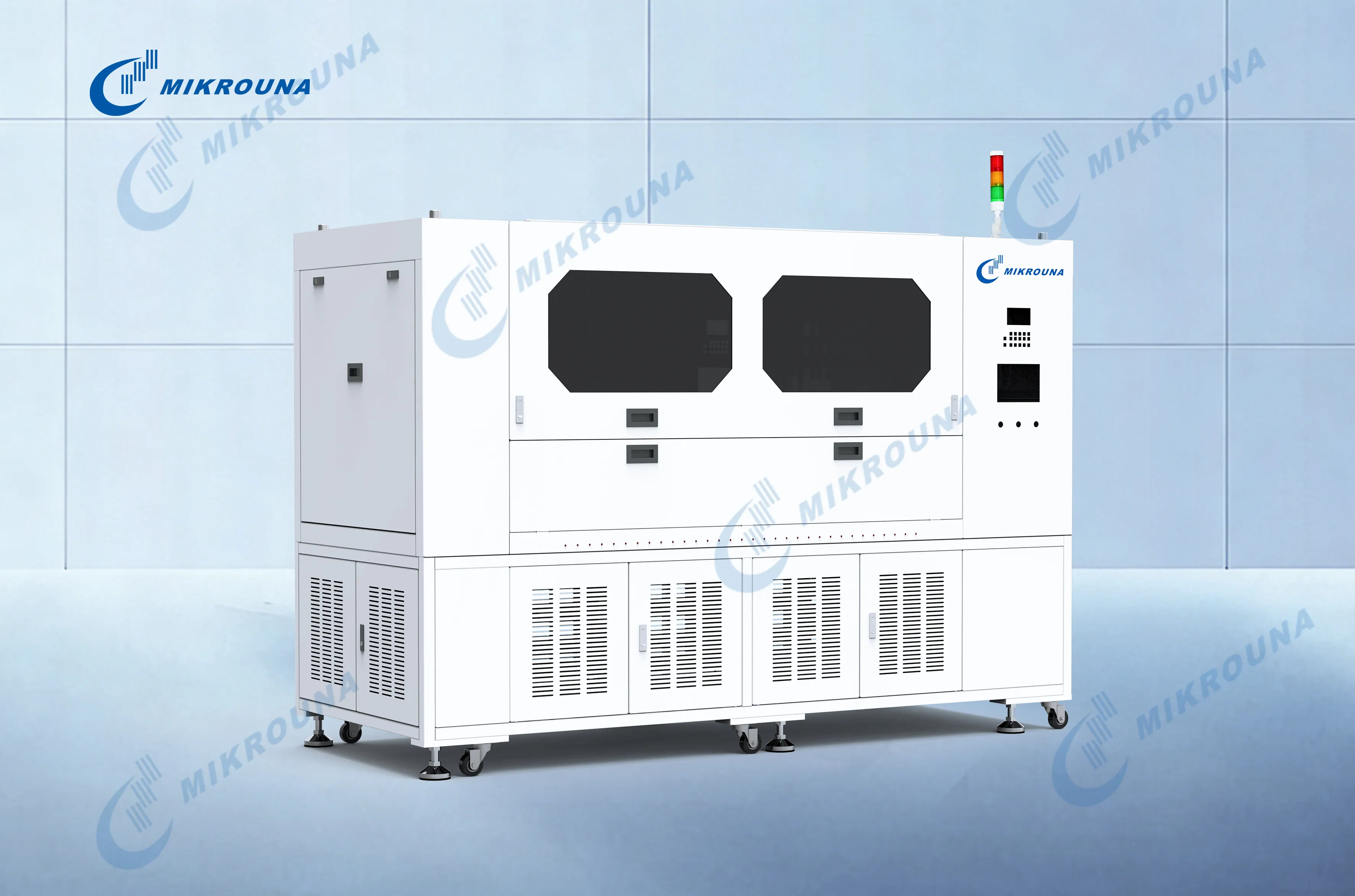
From the perspective of equipment solutions on the market, an automatic vacuum sealing machine is not just "a sealing head". Taking Mikrouna's battery vacuum sealing machine as an example, its functions cover automatic/manual feeding, barcode scanning, side sealing and shaping, battery positioning, vacuum sealing, air bag cutting, edge voltage testing, weighing and barcode scanning, cutting, folding and ironing, defective product sorting and automatic unloading.
This integration approach helps to link multiple actions before and after the second sealing process into a continuous flow, and enables process traceability and defective product management through barcode scanning, weighing, and NG sorting.

III. How to interpret key parameters
To understand a vacuum sealing machine, one cannot simply look at the word "vacuum." One must also consider sealing precision, temperature control, and process flexibility. For example, Mikrouna's vacuum sealing machine has a sealing accuracy of ±0.01mm, a sealing head parallelism of ≤0.03mm, a temperature control accuracy of ±2°C, and adopts a hard sealing mode; its production capacity is ≥12ppm; the movement distance and vacuuming segments are adjustable, and the pressure, vacuum degree and temperature can be monitored in real time.
For selection, sealing accuracy and head parallelism are related to edge sealing consistency, temperature control accuracy affects the stability of hot pressing process, and adjustable vacuuming segments make it easier to adjust the exhaust rhythm for different battery structures.
High-end vacuum sealing machines for lithium-ion batteries should also be compatible with a wide range of pouch cell dimensions, offer flexible adjustments for parameters such as seal-edge width, temperature, and dwell time, and support rapid product changeovers. Furthermore, such machines typically feature chambers constructed from corrosion-resistant aluminum alloy, copper sealing heads, and an integrated electrolyte recovery system.
In this field, mikrouna's lithium battery vacuum sealing machine adopts a modular design, which can be customized to non-standard requirements by adjusting the interlayer spacing and pressure parameters according to different cell sizes. This feature allows it to be flexibly integrated into pilot production lines or large-scale mass production lines.
IV. Application Scenarios and Selection Considerations
Vacuum sealing machines are commonly used in the R&D, laboratory validation, and pilot-scale production of pouch cells that are sensitive to moisture and oxygen—particularly for processes involving liquid, semi-solid, or solid-state lithium batteries.
When selecting equipment, key factors to consider include: compatibility with battery dimensions and the range of model changeovers; adjustability of parameters such as seal width, temperature, and sealing duration; whether vacuum staging and pressure monitoring capabilities align with the required process window; the inclusion of quality-traceability features like edge-voltage testing, weighing, barcode scanning, and the sorting of non-conforming (NG) units; and the ease of routine maintenance, including electrolyte recovery, chamber material, and the upkeep of sealing heads.
V. Conclusion
The core of a lithium battery vacuum sealing machine is to complete degassing and precision hot-pressing sealing in a vacuum environment. By integrating edge cutting, folding, inspection, and sorting processes, it improves the consistency and traceability of the secondary sealing process.
-
 2026-10-12
-
 2026-04-27
-
-
-
 2024-06-01



Mikrouna,Far beyond an equipment supplier — your long-term strategic partner for battery technology upgrading!