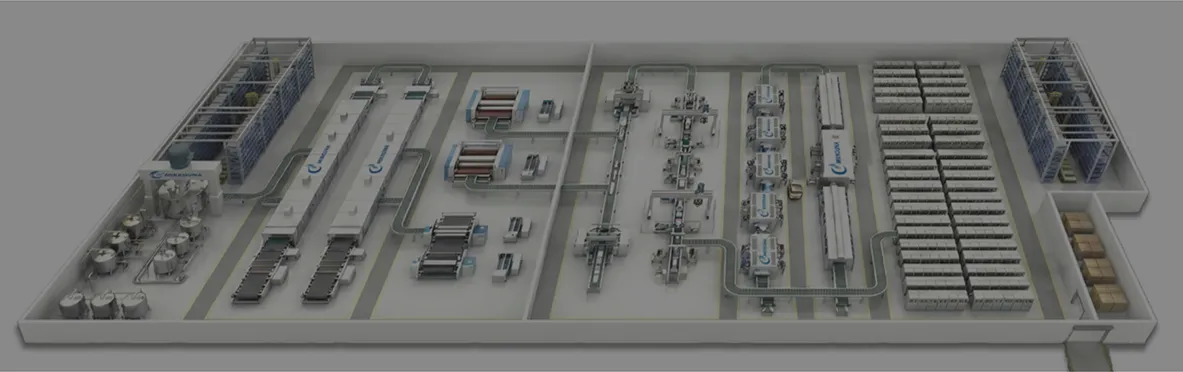


What is a solid-state battery four-roll dry film forming machine?
In solid-state battery fabrication, the thickness consistency, density, and continuous film formation stability of the electrode or solid electrolyte membrane directly affect subsequent stacking, composite processes, and battery performance. The so-called solid-state battery four-roll dry film forming machine can be understood as a continuous calendering film forming equipment for dry process: solid electrode material powder and binder are heated and then pressed into a film with uniform thickness down to the micron level by slowly rotating rollers and hydraulic pressure. The film is then laminated onto copper or aluminum foil through a second roll pressing to form a double film and then wound up, and finally used for the preparation of complete battery electrode sheets.
I. Basic Principles of a Four-Roll Dry Film Forming Machine
The core of dry film forming is not "simple pressing," but rather the coordinated integration of powder supply, temperature control, roller gap adjustment, pressure application, and tension winding/unwinding. Four-roll structures typically employ multi-stage progressive compaction: the material undergoes continuous calendering to gradually increase its density, reducing thickness fluctuations caused by a single calendering cycle. Compared to single-roll or double-roll solutions, four-roll continuous calendering places greater emphasis on roll gap repetitive positioning and operational stability, making it suitable for process scenarios with high requirements for thickness consistency.
In solid-state batteries, the value of the dry process lies in reducing solvent use and subsequent drying steps, but it is also more sensitive to powder mixing uniformity, roller temperature, pressure control and winding tension.
II. How to Understand the Core Structure and Parameters
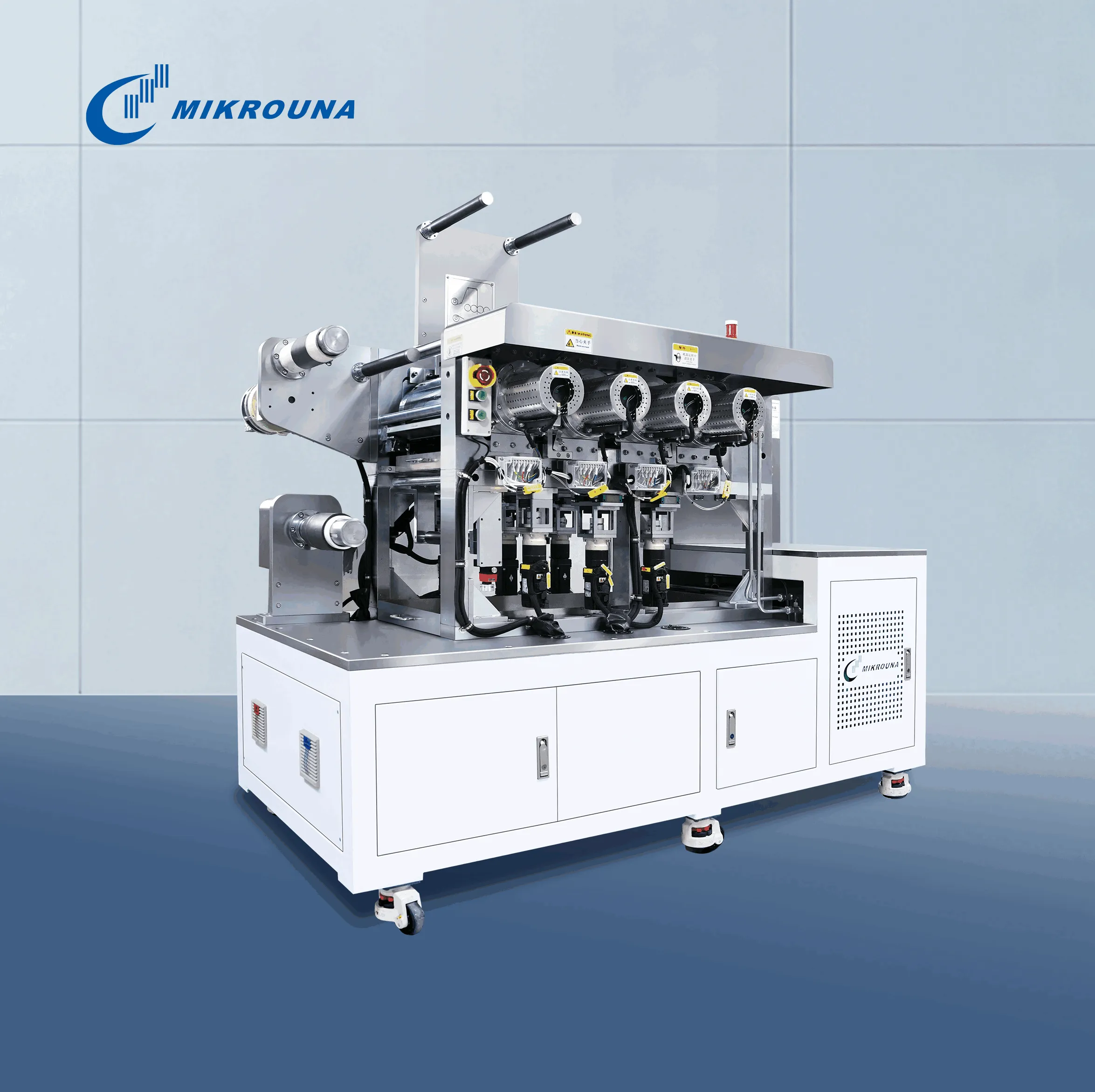
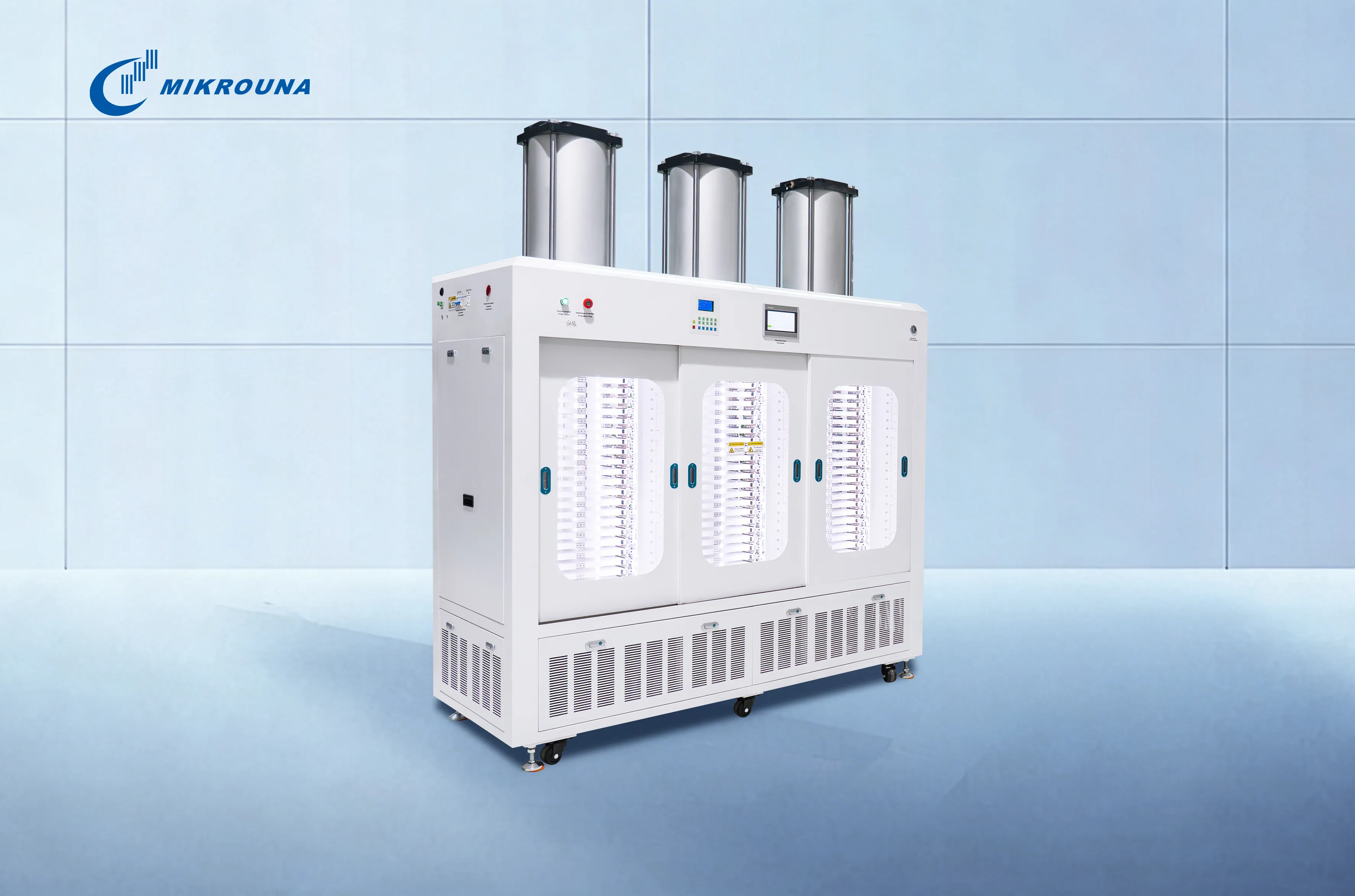
Based on the publicly available parameters of the mikrouna four-roll dry film forming machine, it can be understood from several dimensions:
1. Four-roll precision calendering structure: Four-roll continuous calendering and multi-stage progressive compaction help improve the density and thickness consistency of the electrode sheets.
2. High-stability roll gap adjustment system: Supports micron-level adjustment and repeatable positioning, reducing the impact of human error on thickness stability.
3. Dual-feeder continuous feeding design: Dual-feeder continuous and uniform feeding reduces the risk of material interruption and accumulation, and improves film uniformity and continuous production capacity.
4. Intelligent temperature control heating system: The high-precision temperature controller controls the roller temperature in a closed loop, which can quickly heat up and stabilize the temperature, thus improving the plasticizing effect of the material and the calendering quality.
5. Magnetic powder tension control system: constant tension control during winding and unwinding reduces wrinkling, stretching, and tape breakage problems.
6. Highly integrated electronic control system: Centralized operation via touch screen, integrating parameter setting, status monitoring and fault alarm.
7. Stable frame and vibration reduction design: The overall frame is rigid and the base plate is stable, which reduces operating vibration and improves rolling accuracy and long-term operational reliability.
8. Safety and maintenance optimization: The three-color alarm system and modular structure facilitate quick inspection and routine maintenance.
In actual production line planning, mikrouna's four-roll dry film forming machine can be customized as needed, making it easy to match the roll gap, temperature control and unwinding schemes with material characteristics and process rhythm.
III. Selection and Usage Precautions
A four-roll dry film forming machine is not an isolated piece of equipment. When selecting a model, attention should be paid to whether the material system and process window are compatible. For example, when the powder has poor flowability, dual-feed trough design and anti-stacking design are more important; when the film thickness requirement is high, roll gap repositioning and frame vibration reduction are more critical; during continuous winding, constant tension control will affect the risk of wrinkling and tape breakage. In addition, closed-loop temperature control, visualized electronic control, and modular maintenance design are crucial for subsequent process debugging and daily operation and maintenance efficiency.
IV. Conclusion
The solid-state battery four-roll dry film-forming machine is essentially a device that continuously produces micron-sized films from dry powder through multi-stage calendering, temperature control, and tension control, and then composites them with current collectors.
-
 2024-06-01
-
-
 2026-10-13
-
-



Mikrouna,Far beyond an equipment supplier — your long-term strategic partner for battery technology upgrading!